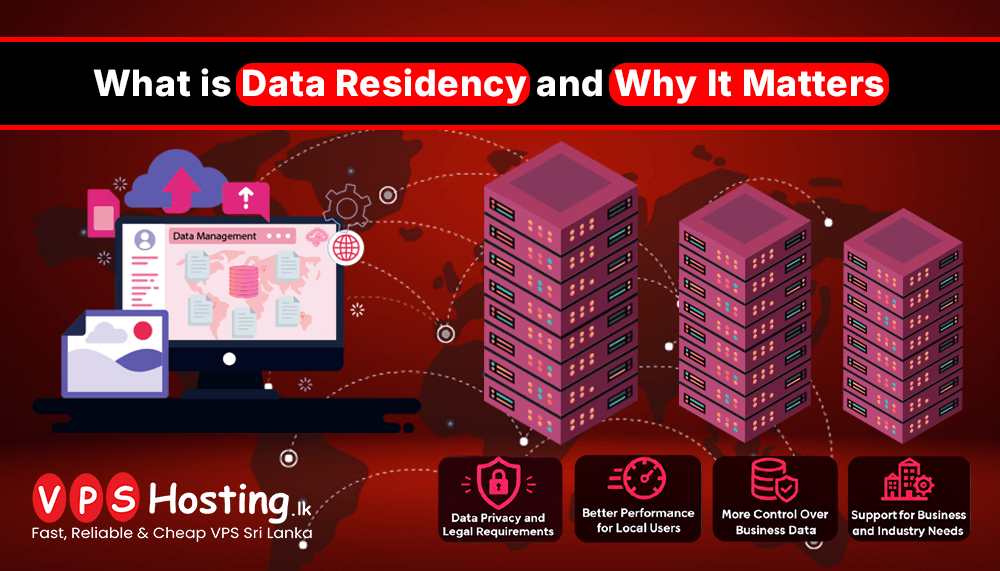
What is Data Residency and Why It Matters
When choosing a hosting service, many businesses focus on server speed, storage, and price. However, there is another important factor to consider: where your data is stored. This is known as data residency. For businesses in Sri Lanka, data residency can affect how customer information is managed, which legal requirements may apply, and how quickly users can access online services. Understanding it can help you choose a suitable VPS hosting solution for your website, application, or business system.
What Is Data Residency?
Data residency means the physical location where your digital data is stored. When you use a VPS or cloud hosting service, your files, databases, and application data are stored on servers in a particular country or region. For example, if your website runs on a VPS located in Colombo, its data may be stored in a data centre in Sri Lanka. If you choose a VPS located in another country, your data may be stored there instead. However, the main server location may not tell the whole story. Backups, monitoring systems, and other services may store or process copies of your data in different locations. It is important to check these details with your hosting provider.
Why Does Data Residency Matter?
1. Data Privacy and Legal Requirements
Different countries have different laws covering personal information, privacy, and data protection. Depending on your business, the type of data you collect, and the countries involved, you may need to follow specific rules about where data is stored or transferred. For example, a business that handles customer records may need to check whether its industry or legal obligations require data to remain in a particular country. Choosing a server location does not automatically make your business compliant with every applicable law. You should understand your legal responsibilities and confirm where your data, backups, and related records are stored.
2. Better Performance for Local Users
Server location can affect how quickly information travels between your website and its visitors. This delay is called latency. If most of your customers are in Sri Lanka, hosting your website on a server in Sri Lanka can reduce network delays for local visitors. This can help websites, business applications, and online systems feel more responsive. However, server location is only one part of performance. Network quality, server resources, website optimisation, and the visitor's internet connection also matter.
3. More Control Over Business Data
Knowing where your data is stored helps you make better decisions about access, security, backups, and data management. This is especially important for businesses that handle customer details, financial records, internal documents, or other sensitive information. Before choosing a hosting provider, ask where the main server is located, where backups are stored, who can access the data, and what security measures are in place. These details help you understand how your information is managed.
4. Support for Business and Industry Needs
Some organisations have specific requirements about where their data must be stored. These may come from laws, industry rules, customer agreements, or internal company policies. For example, a company working with sensitive customer information may need to select a hosting location that meets its contractual and compliance requirements. Checking these needs before purchasing a VPS can help prevent problems when your business grows or starts serving customers in new markets.
Data Residency vs Data Sovereignty
These two terms are related, but they do not mean the same thing. Data residency refers to the physical location where data is stored. Data sovereignty refers to the laws and legal authority that apply to the data. For example, storing data in a particular country tells you where the data is located. Data sovereignty concerns which legal rules may govern access to that information. A business should consider both when choosing a hosting service, especially when working across different countries.
How to Choose the Right VPS Location
Before ordering a VPS, consider these important points:
- Know your audience: If most users are in Sri Lanka, a local server may provide lower latency.
- Check legal requirements: Understand whether your business must store certain data in a specific location.
- Ask about backups: Confirm whether backup copies are stored in the same country or another region.
- Review security: Look for appropriate access controls, security updates, monitoring, and backup options.
- Plan for growth: Consider where your future customers will be and whether your hosting setup can support them.
The right location depends on your business needs. A local server may suit a Sri Lankan business serving local customers, while an overseas server may be more appropriate for a business targeting a different region.
Choose VPS Hosting That Fits Your Needs
Choosing a VPS is not only about processing power and storage. Understanding where your data is stored can help you make informed decisions about performance, privacy, and business requirements. VPSHosting.lk offers VPS hosting options in different locations, including Sri Lankan Linux VPS hosting with servers located in Colombo. This can be useful for businesses that want to host their websites and applications closer to their Sri Lankan audience. Visit VPSHosting.lk to explore available VPS solutions. If data residency is important to your business, confirm the location of the server, backups, and any related data services before choosing a plan. By understanding data residency and selecting a suitable hosting location, you can build a hosting setup that better supports your business, your customers, and your long-term plans.